Restore Your Chain Link Fence
Get help with bent, loose, or damaged chain link fencing.
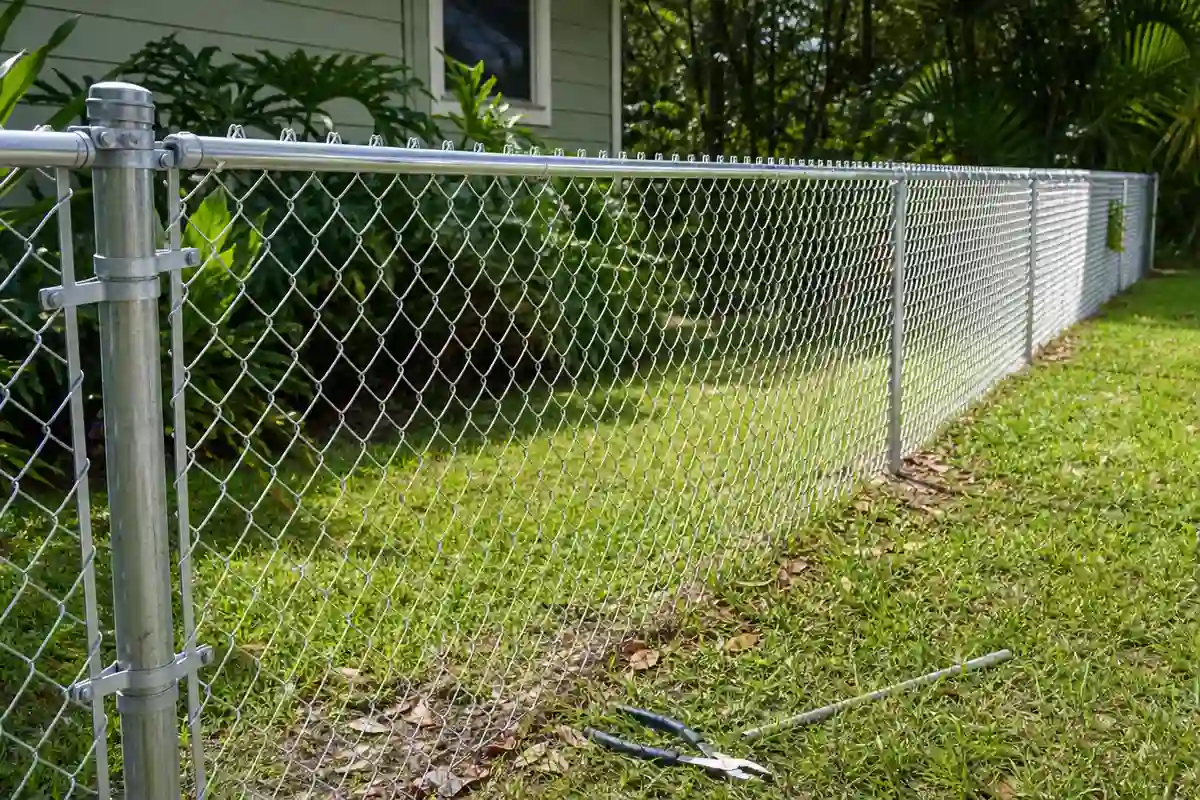
Chain link fencing is durable, but impact, corrosion, storm debris, soil movement, and ordinary wear can leave sections bent, loose, or difficult to use. The visible mesh is only one part of the system. Posts, top rail, tension hardware, fittings, and gate components all work together to keep the fence upright and properly tensioned.
Our chain link fence repair service addresses damaged fabric, sagging or loose mesh, bent rails, leaning posts, broken fittings, and gate problems. We look at how the damage affects the entire section so the repair restores both containment and stability.
Chain link fence fabric depends on tension. When the tension changes, the fence may sag, bow, pull away from a terminal post, or look loose even when the mesh itself is not badly damaged. A good repair identifies why that tension changed before simply pulling the fabric tighter.
Bent top rail is common after falling branches, heavy debris, or direct impact. Because the rail helps keep the upper edge of the fence aligned, a damaged section can allow the fabric to droop or shift. Repair may involve replacing the affected rail section and checking the fittings and posts on either side.
Posts can lean after impact or ground movement. Terminal, corner, and gate posts are especially important because they handle substantial tension. When one moves, the fence fabric can become loose over a longer distance than the immediate area around the post. We inspect the surrounding line so the repair accounts for that transferred tension.
Damaged mesh can sometimes be repaired within a limited section when the surrounding fabric remains in good condition. Larger tears, extensive deformation, or widespread corrosion may call for replacement of a broader section. The goal is to restore a consistent barrier without leaving a weak connection where the new and existing material meet.
Loose tension bands, brace bands, ties, caps, and other fittings can also contribute to instability. Small hardware pieces perform important jobs in a chain link system, and missing or damaged fittings can allow movement that becomes more noticeable over time.
Bottom-edge problems deserve attention when pets, landscaping equipment, erosion, or repeated pressure has distorted the fabric. A fence that lifts or bows at the bottom may no longer provide the containment the owner expects even if the top still looks straight. We look at both the condition of the mesh and the way the fence meets the ground.
Corrosion varies from cosmetic surface weathering to significant loss of material. When rust has weakened posts, rails, fittings, or fabric, tightening the existing components may not be enough. We identify visibly compromised pieces so the repair is based on usable material rather than simply improving appearance.
Chain link gates introduce another set of moving components. Hinges, latches, frames, wheels on some larger gates, and gate posts all affect operation. A gate that drags or refuses to close can result from hardware adjustment, but a leaning gate post or twisted frame may require more substantial repair.
Storm damage can affect several parts at once. A fallen limb might bend the top rail, stretch the fabric, loosen fittings, and pull a nearby post. We inspect the sequence of damage instead of treating each symptom in isolation.
For homeowners, rental properties, pet enclosures, side yards, utility areas, and other fenced spaces, the priority is usually simple: get the fence secure and functional again. Tell us whether the mesh is loose, a rail is bent, a post moved, or a gate stopped working, and we can start with the most likely repair points.
Chain link gate repair usually involves more than the latch. We check the gate frame, mesh tension, hinges, latch, fittings, and gate posts when a gate drags, sags, or will not close correctly.
A bent frame or leaning gate post can affect both the gate and the connected fence fabric, so the surrounding tension points are included in the repair. This helps the gate and the chain link run work together again.
We check tension points, terminal posts, fittings, and rail alignment before restoring proper fabric tension.
We evaluate localized deformation, tears, and stretched mesh to determine whether a section can be repaired or should be replaced.
Damaged rail sections and nearby fittings are addressed to restore support along the top of the fence.
We assess footing movement, impact damage, and transferred tension before stabilizing the affected post and fence line.
Sagging or loose fencing is traced to moved posts, bent rails, or loosened connections before the fabric is re-tensioned.
Tension bands, brace bands, ties, caps, and other fittings are checked when small hardware failures allow the fence to move.
We inspect the rail, fabric, posts, fittings, and surrounding run after a fallen limb, tree, or severe weather event.
Gate posts, hinges, latches, frames, and alignment are checked when a gate drags, sags, or will not close correctly.
| Service | Estimated Cost | Average |
|---|---|---|
| Minor mesh or fitting repair | $125–$350 | $225 |
| Top rail repair | $175–$500 | $300 |
| Post or small section repair | $300–$900 | $550 |
| Multiple damaged sections | $750–$2,500+ | $1,350 |
Typical planning ranges. Actual pricing depends on fence height, coating, fabric condition, post damage, hardware, access, amount of material, and the size of the affected area.
Loose mesh often points to movement elsewhere, so we look at posts and fittings before tightening the fabric.
Bands, ties, caps, fittings, and gate components can be small but essential parts of a durable chain link repair.
We focus on restoring security, alignment, and function without making a straightforward chain link repair unnecessarily complicated.
We identify bent fabric, sagging mesh, rail problems, post movement, and damaged fittings.
Terminal points, posts, rails, and connections are reviewed to understand why the fence moved.
We determine whether fabric, rail, posts, fittings, or gate hardware need attention.
Damaged components are repaired or replaced and the fence is brought back into proper tension where possible.
We check the repaired area for secure connections, alignment, and gate function when applicable.
Chain link fence problems can overlap with gate and storm work. A sagging or misaligned gate may need chain link gate repair, and damage after a fallen limb or severe weather may call for storm damage fence repair. If you are weighing a broader repair scope, our general fence repair page and the fence repair FAQ can help you identify the right starting point.
Fix sagging, dragging, sticking, misaligned, damaged, or difficult-to-latch fence gates.
Repair fences damaged by Jacksonville wind, falling limbs, debris, saturated soil, and severe weather.
Practical repairs for leaning, broken, loose, rotted, or damaged fence sections throughout Jacksonville.
Fence Repair Jacksonville Fl is proud to serve Jacksonville and the surrounding communities of Northeast Florida:
Often, yes. A fallen limb might bend the top rail, stretch the fabric, loosen fittings, and pull a nearby post. We inspect the sequence of damage instead of treating each symptom in isolation, then repair or replace the affected components. The repair typically involves straightening or replacing the top rail, re-tensioning or replacing the stretched fabric, refitting loosened hardware, and resetting any post that was pulled out of plumb — so the finished section holds tension like the rest of the run.
Chain link fabric depends on tension. Sagging usually means tension changed somewhere — a terminal post moved, the top rail bent, or fittings loosened. We identify why the tension changed before simply pulling the fabric tighter. Because chain link is a tension system, sagging almost always means something moved: a leaning terminal post, a bent top rail, or loosened fittings. The repair addresses what moved first, then re-tensions the fabric — simply pulling mesh tighter over a moving post does not last.
Damaged mesh can often be repaired within a limited section when the surrounding fabric remains in good condition. Larger tears, extensive deformation, or widespread corrosion may call for replacement of a broader section. Yes. Chain link repairs localize well because fabric, rail, and fittings can be replaced section by section. Matching is also easier than with wood or vinyl, especially in standard galvanized finishes, so a repaired run usually blends in cleanly.
Yes, chain link fence mesh can often be repaired when the surrounding fabric, posts, rails, and fittings remain usable. We check for tears, stretching, deformation, corrosion, and lost tension, then repair or replace the affected section and restore its connections.
Bent rail, loose mesh, or a leaning post can affect more of the fence than it first appears.
Free — no obligations