Repair Damaged Vinyl Fencing
Get your vinyl fence back in shape.
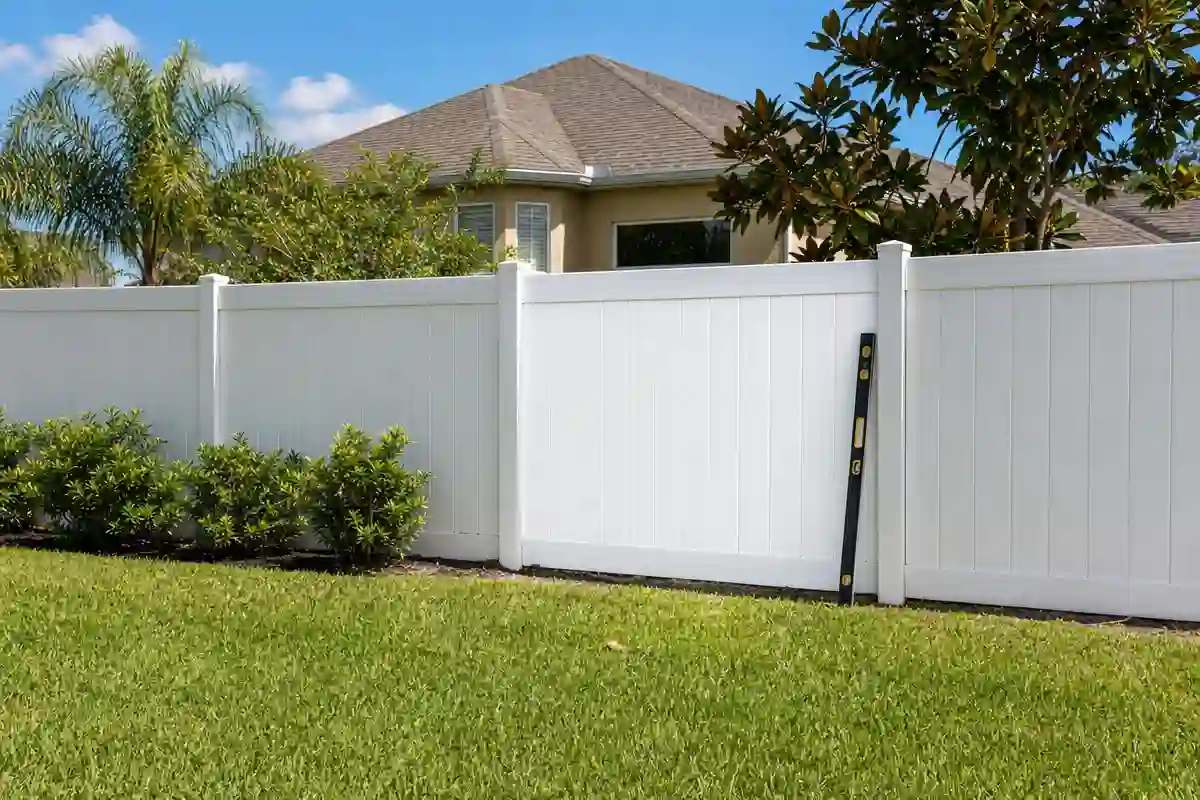
Vinyl fencing does not rot like wood, but it can still crack, shift, loosen, and break. Impacts from lawn equipment, branches, debris, or storms can damage individual pieces, while post movement can pull an otherwise intact section out of alignment. Because vinyl systems fit together differently from wood fencing, the repair has to account for how panels, rails, posts, and internal supports connect.
We repair common vinyl fence problems throughout Jacksonville, including loose or damaged panels, cracked components, leaning posts, separated rails, and gate issues. We first determine whether the visible damage is isolated or connected to movement elsewhere in the fence.
Vinyl fences can look simple from the outside, but the components work together as a system. Rails typically fit into posts, panels or pickets depend on those rails for support, and some installations use internal reinforcement in key areas. When one post moves, the surrounding sections can shift even if they are not cracked.
Impact damage is one of the clearest repair situations. A branch, mower, vehicle, flying debris, or other object can crack a panel or break a rail while leaving adjacent sections largely intact. In those cases, we inspect the connection points and nearby posts before deciding whether the damaged component can be replaced on its own.
Post movement is more structural. If the footing shifts or the ground no longer holds the post correctly, the panel can lean, rails can pull against their openings, and a gate can become difficult to latch. Simply forcing the panel back into position will not provide a lasting repair if the supporting post remains unstable.
Storm conditions can combine impact and movement. Saturated ground may allow a fence line to shift at the same time strong winds apply pressure to broad privacy panels. After a storm, an apparently minor lean may be worth checking before repeated wind movement places additional stress on rails and connections.
Cracked vinyl has different repair considerations than cracked wood. Depending on where the break occurs and how the component is designed, replacement may be more appropriate than attempting a cosmetic patch. Our focus is on restoring function and stability rather than hiding structural damage.
Color and style matching can also matter. Vinyl products vary by manufacturer, profile, texture, dimensions, and age. Older fencing can weather differently than a new replacement component. When exact matching is not practical, we explain the limitation rather than promising an invisible repair.
Loose caps and smaller trim components may seem minor, but larger movement underneath them can point to a post or alignment issue. We separate cosmetic concerns from structural ones so the repair effort goes where it is most useful.
Vinyl gates deserve a close look when they begin dragging or refusing to latch. The problem may be hinge adjustment, but it can also involve post movement, frame alignment, hardware, or clearance at the ground. Because a gate moves repeatedly, small alignment errors often become noticeable sooner there than on a stationary fence section.
Jacksonville's sun and storms create a demanding environment for outdoor materials. While vinyl avoids some maintenance issues associated with wood, no fence is immune to impact, soil movement, or hardware wear. Repairing a loose or shifted section before it breaks can help prevent damage from spreading into neighboring components.
If you have a cracked panel, leaning section, separated rail, or vinyl gate that no longer lines up, tell us where the problem is and how it started if you know. That gives us a useful starting point for planning the repair.
Yes, individual panels or components may often be replaced when the surrounding fence remains usable. The repair starts with identifying the panel profile, manufacturer, color, and dimensions, then checking whether the rails and post connections are still sound.
Age and color changes can make an exact match difficult, and different manufacturers may use incompatible profiles or rail connections. We also check for post movement and damage that extends beyond the visible panel before treating the problem as a one-piece replacement.
Vinyl fences lean or shift when a post moves or its footing loses support. Saturated soil after heavy rain, storms, wind pressure on privacy fencing, impact, and drainage around posts can all contribute to post movement and a section that no longer sits straight.
Because rails and panels fit into the posts as a system, forcing a shifted section back into place will not last if the support remains unstable. We check the post, footing, connections, and nearby sections before realigning the fence.
Vinyl fence gate repair can involve sagging, misalignment, latch problems, hinge issues, or movement at the gate post. We check the gate frame and hardware along with the post and ground clearance, since a small shift can keep the gate from closing squarely.
When a gate problem follows a storm or affects the connected fence section, we look at that surrounding movement as part of the repair rather than adjusting the latch alone.
Repair is often the sensible first conversation when damage is localized and most of the fence still has useful life. Replacement deserves consideration when the system has widespread structural or matching problems.
We inspect cracked or broken panels along with their rails and posts to determine the appropriate component replacement.
Broken or missing pickets are evaluated with the rails and adjacent pieces so the visible repair does not miss a supporting problem.
Rails that have shifted or separated are evaluated for damage at both the rail and post connection points.
We check post stability and footing movement before bringing affected sections back toward proper alignment.
We look for movement at posts and connections when panels no longer line up or gaps open between sections.
Post caps and smaller trim components can be replaced where practical after checking whether movement underneath caused the damage.
We assess cracks, broken rails, shifted panels, and connected components after branches, equipment, debris, or wind damage.
We address alignment, hinge, latch, frame, post, and clearance issues affecting vinyl gates.
| Service | Estimated Cost | Average |
|---|---|---|
| Minor vinyl component repair | $150–$400 | $275 |
| Single post or rail repair | $250–$600 | $400 |
| Panel or section repair | $350–$1,000 | $650 |
| Multiple vinyl sections | $900–$3,000+ | $1,650 |
Typical planning ranges. There is no single price for vinyl fence repair. Pricing depends on damaged panels, posts, rails, or gates; matching the existing vinyl; product availability; site access; the amount of damage; and whether a storm or impact affected connected sections. The ranges below are estimates for planning only, not guaranteed pricing or a quote.
We check how panels, rails, and posts interact instead of focusing only on the cracked component.
We explain when age, manufacturer differences, or discontinued profiles may affect the appearance of replacement pieces.
We pay attention to post movement and gate geometry so the repaired fence functions as well as it looks.
We identify cracked, loose, shifted, or broken vinyl components.
Supporting posts, rail openings, reinforcement, and nearby sections are reviewed for movement.
We identify the components that need replacement and discuss matching considerations.
Damaged components are addressed and the section is aligned as the existing installation allows.
We check connections and movement after the affected area has been restored.
Vinyl fence problems can overlap with gate and storm work. A sagging or misaligned vinyl gate may need vinyl fence gate repair, and wind, limb, or impact damage may call for storm damage fence repair. If you are weighing a broader repair scope, our general fence repair page explains how we decide what should be repaired first, and the fence repair FAQ answers the questions Jacksonville homeowners ask most.
Fix sagging, dragging, sticking, misaligned, damaged, or difficult-to-latch fence gates.
Repair fences damaged by Jacksonville wind, falling limbs, debris, saturated soil, and severe weather.
Practical repairs for leaning, broken, loose, rotted, or damaged fence sections throughout Jacksonville.
Fence Repair Jacksonville Fl is proud to serve Jacksonville and the surrounding communities of Northeast Florida:
Post movement is usually the cause. If the footing shifts or the ground no longer holds the post correctly, the panel can lean and rails can pull against their openings. Heavy rain, saturated soil, storms, wind pressure on privacy panels, and impact can all contribute. The lasting fix is to reset or replace the unstable post, then reassemble the section plumb rather than forcing panels back into position.
Depending on where the break occurs and how the component is designed, replacement may be more appropriate than a cosmetic patch. Our focus is on restoring function and stability rather than hiding structural damage. Small cracks sometimes can be stabilized, but a badly cracked or broken panel is usually replaced with a matching component. The practical question is matching: vinyl profiles vary by manufacturer, so we identify the profile and explain honestly how close the match will be before ordering anything.
Vinyl products vary by manufacturer, profile, texture, dimensions, and age, and older fencing can weather differently than a new component. When exact matching is not practical, we explain the limitation rather than promising an invisible repair. When an exact match is not available — which happens with discontinued or weathered lines — we explain the limitation up front and discuss options, such as placing the new component where the contrast is least noticeable, rather than promising an invisible repair.
Yes, one vinyl fence panel can often be replaced when the surrounding rails, posts, and sections remain usable. We check the panel profile, manufacturer, color, rail compatibility, and post movement first, because damage that extends beyond the visible panel may require a broader repair.
Repair usually makes sense when the damage is limited to one panel, post, rail, gate, or localized impact area and the rest of the fence is stable. Replacement may deserve consideration when cracking, unstable posts, discontinued profiles, storm damage, or deterioration affects many sections. We explain both scopes without assuming replacement is necessary.
Yes, storm-damaged vinyl fencing can often be repaired when the affected panels, rails, posts, and connections can be restored or matched. We check for wind pressure, saturated soil, fallen limbs, impact, and movement beyond the visible break before deciding whether targeted repair is practical.
Cracked vinyl and moving posts can put stress on nearby panels. Find out what needs attention.
Free — no obligations