Fence Down After A Storm?
Get help with wind, limb, and debris fence damage.
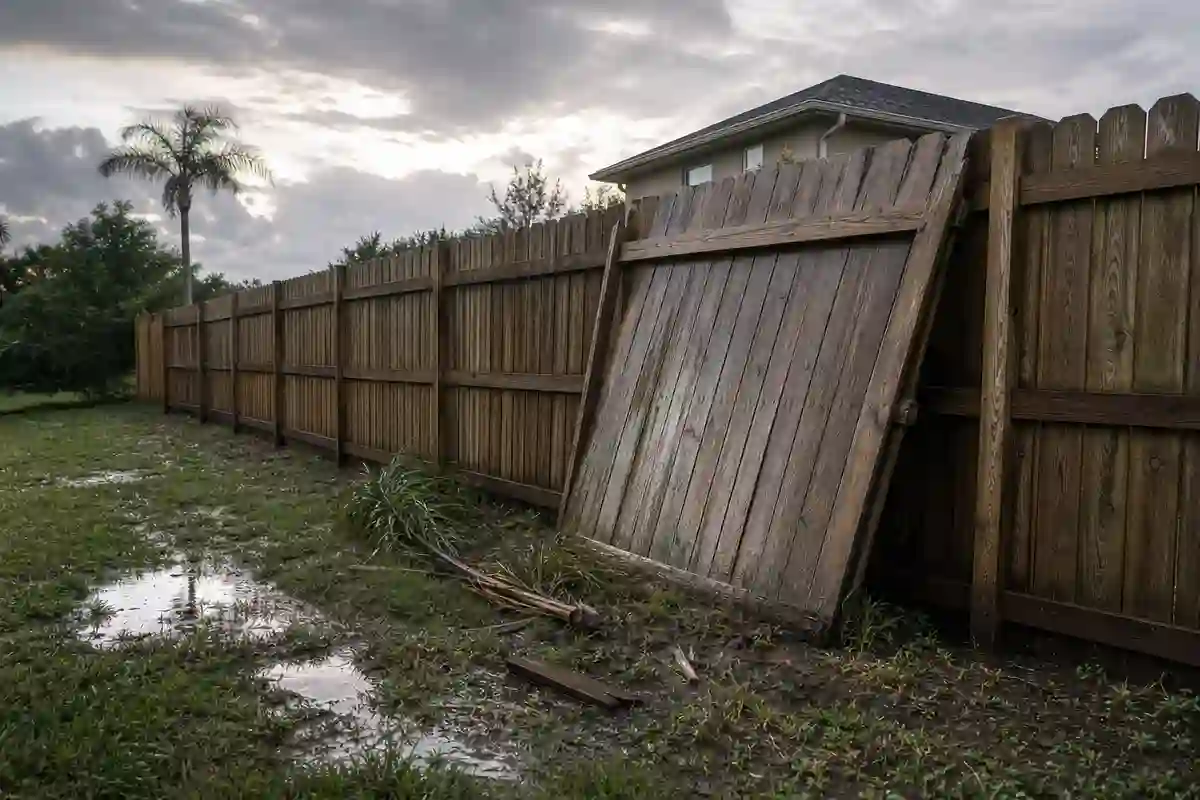
Storm-damaged fencing can create immediate problems around a property. A section may be leaning into a yard, panels can separate from posts, gates may stop closing, and broken material can leave openings that affect pets, privacy, or access. Damage that looks limited to one spot can also place stress on neighboring sections.
Our storm damage fence repair service covers wind, fallen limbs, flying debris, impact damage, and fence movement associated with saturated ground. We work with wood, vinyl, and chain link systems and begin by identifying unstable components before planning the permanent repair.
Strong weather can damage a fence in several different ways at once. Wind pushes against the broad surface area of privacy fencing, saturated soil can reduce support around posts, tree limbs can create concentrated impact, and moving debris can crack or bend individual components. The resulting damage is not always limited to the most obvious broken panel.
Safety and stability come first. A leaning section under tension, cracked post, hanging panel, or bent component can move unexpectedly. We assess which parts appear unstable and which neighboring sections may have been pulled or twisted during the event.
Wood fencing commonly experiences broken pickets, cracked rails, leaning posts, and entire sections pushed out of line. Older components that were already weakened by moisture or age may fail during a storm even when nearby newer sections remain intact. That makes the post and rail inspection especially important.
Vinyl fencing can crack from impact or shift when supporting posts move. Wind pressure on solid privacy panels can transfer force through the rails and posts. A panel that looks undamaged may still sit out of alignment because the supporting structure moved.
Chain link fencing usually allows more wind to pass through, but falling trees, limbs, and debris can bend top rails, stretch fabric, move posts, and damage fittings. A single impact can affect tension over a longer run of fence, so we check beyond the point of contact.
Gates often reveal storm movement quickly. A gate that latched normally before the weather event may suddenly drag or refuse to close because a post shifted, a frame twisted, or connected fencing moved. Restoring gate alignment may require addressing the supporting fence first.
Saturated ground can create problems even without a direct impact. When soil around a marginal post becomes soft, wind loading can push the post farther out of position. After the soil dries, the fence may remain leaning. Resetting or replacing the affected support may be necessary before the section can be realigned.
Fallen limbs should be considered carefully because removing the weight can change how the damaged fence moves. Once the obstruction is gone, cracked rails or posts may no longer be supported. The repair plan should account for the condition of the fence after debris is safely cleared.
Storm damage is also a point when homeowners have to decide between targeted repair and larger replacement. If one section took the impact and the rest remains stable, a focused repair may be reasonable. If many old posts shifted or the storm exposed widespread deterioration, a larger scope may provide better long-term value. We explain what we see so you can make that decision with a clearer picture of the fence's condition.
Documentation may be useful for property owners dealing with storm-related claims or records, so taking clear photos of damage before cleanup is often sensible when it can be done safely. Coverage and claim requirements vary, so questions about reimbursement should be directed to the applicable insurer or policy provider.
Jacksonville storms can arrive quickly, and damaged fencing is one of those property issues that tends to become more inconvenient the longer it remains open or unstable. If a storm has left your fence leaning, broken, separated, or unable to secure the yard, describe the damage and we will help you plan the repair.
We evaluate leaning posts, shifted panels, loose rails, and connection failures caused or exposed by strong winds.
After debris is safely cleared, we assess impact damage to posts, rails, panels, fabric, and surrounding sections.
Posts that shifted, cracked, or loosened during severe weather are checked before fence alignment is restored.
Damaged structural and privacy components are repaired or replaced where the surrounding fence remains serviceable.
We inspect posts, hinges, frames, latches, and connected fence sections when a storm leaves a gate out of alignment.
| Service | Estimated Cost | Average |
|---|---|---|
| Minor storm damage | $200–$600 | $375 |
| Single damaged section | $400–$1,200 | $750 |
| Multiple posts or panels | $900–$3,000 | $1,700 |
| Extensive storm repairs | $2,000–$5,000+ | $3,200 |
Typical planning ranges. Storm repair costs vary widely with fence material, number of affected sections, post movement, debris impact, access, matching needs, and hidden damage discovered during inspection.
Storm forces can move neighboring posts and connections, so the inspection includes the surrounding fence.
We repair common storm damage affecting wood, vinyl, chain link, and fence gates.
When the remaining fence is still serviceable, we identify targeted repairs rather than assuming every damaged fence needs full replacement.
We begin with leaning, hanging, broken, or displaced sections that need attention.
Posts, rails, panels, fabric, gates, fittings, and nearby sections are checked for transferred movement.
We separate repairable damage from components that are too compromised to remain in service.
Posts and other supporting components are addressed before final alignment and finish work.
The repaired area is checked for stability, alignment, connections, and gate operation where applicable.
Fence problems often overlap. A leaning section may involve a gate that has started dragging, and damage that follows severe weather is covered by our storm damage fence repair service. If you are weighing repair against broader work, our general fence repair page explains how we decide what should be repaired first, and the fence repair FAQ answers the questions Jacksonville homeowners ask most.
Repair rotted posts, broken pickets, loose rails, leaning sections, and other common wood fence problems.
Repair cracked panels, loose rails, leaning posts, damaged sections, and problem vinyl fence gates.
Fix sagging, dragging, sticking, misaligned, damaged, or difficult-to-latch fence gates.
Practical repairs for leaning, broken, loose, rotted, or damaged fence sections throughout Jacksonville.
Fence Repair Jacksonville Fl is proud to serve Jacksonville and the surrounding communities of Northeast Florida:
If one section took the impact and the rest remains stable, a focused repair is often reasonable. If many old posts shifted or the storm exposed widespread deterioration, a larger scope may provide better long-term value. We explain what we see so you can decide with a clearer picture. If you are documenting damage for an insurance claim, photograph everything before cleanup and confirm coverage questions with your insurer — we can describe the damage and scope, but coverage decisions belong to your provider.
Sooner is better. A leaning section under tension, cracked post, or hanging panel can move unexpectedly, and open sections affect pets, privacy, and access. We begin by identifying unstable components before planning the permanent repair. Delays also tend to grow the scope: wet ground lets damaged posts keep moving, and a section under tension can pull its neighbors out of line. We start by stabilizing the unsafe components, then plan the permanent repair.
Often, yes. Saturated ground can let a marginal post move under wind loading, and the fence may remain leaning after the soil dries. Resetting or replacing the affected support is usually the first step before the section is realigned. Yes, in most cases. Storm leans usually trace to shifted posts or saturated footings, and once the post is reset or replaced the section can be brought back into alignment. We also check neighboring sections, because storm forces often travel beyond the obvious impact point.
After a Jacksonville storm, start with the sections that moved, broke, or stopped working.
Free — no obligations